d iStudents clad in tie-dye shirts scatter across the lawn as a live band plays psychedelic music. The scene is straight out of the 20th century—but instead of the 1960s, this takes place in 2026.
A blast to the past
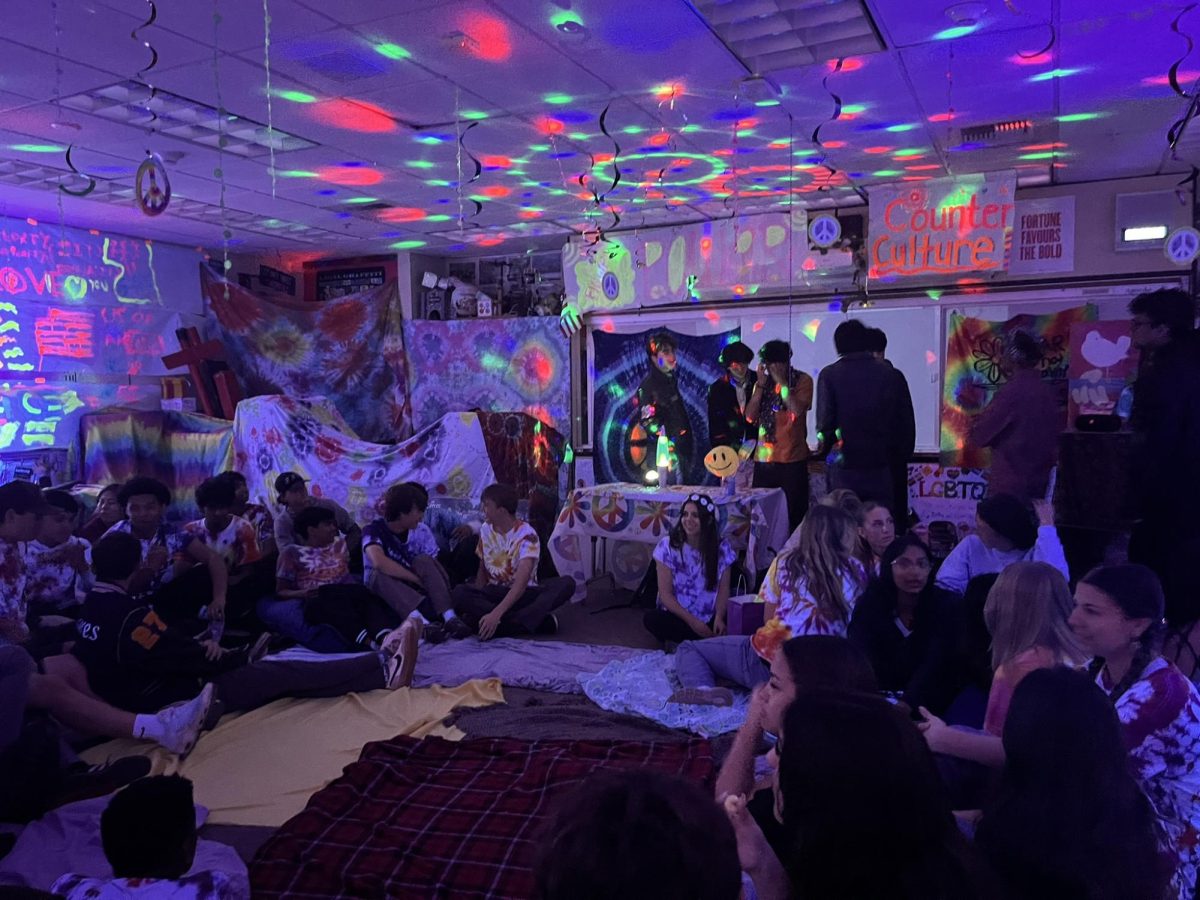
For over twenty years, Amador’s US History classes have participated in Counter Culture Day during the classes’ lessons on the 60s counterculture movement. Throughout the week, students tie-dye their own colorful shirts, decorate their classrooms in neon signs, and dress up in retro fashion.
“The junior class comes together to celebrate the culture that runs counter to the mainstream in America in the 1960s. That’s the historical part, though. For us, it’s more than that. It’s trying to keep a tradition on this campus where the junior class comes together in the spring during a lot of hard things, like AP finals and the stress of school, to do something that’s lighthearted and fun,” said US History teacher Jill Battilega.
While Counter Culture Day is a longstanding tradition, Amador has not always upheld it. By re-incorporating Counter Culture into the curriculum, teachers hope to encourage students to take a break from their regular academic schedules.
“We are trying to revive post-COVID the idea of identity, connection, connecting to your class, connecting to your campus, and again, doing something that with your peers is not just academic. We’re very heavily academics-focused here, and we love that, and we want to make sure that our students feel connected to this campus and their school,” said Battilega.
Counter Culture Day is a chance to connect with peers outside of school-related activities. Through wearing coordinated tie-dye shirts and eating lunch together, students have a new opportunity to bond.
“Counter Culture Day, to me, it’s like a time machine. It’s like going right back into the 1960s. It’s so fun, ant’s a time where we all kind of embrace peace. We set aside our differences, and we just love one another, you know?” said US History student Natalia Bharaj (‘27).
Memorializing student movements
Counter Culture Day is intended to symbolize the student expression of the 60s. Most students match clothing with tie-dye shirts, and the vibrant designs each student creates evoke a sense of solidarity.
“I think it’s just a day for us to experience what the 60s were like, when everyone was expressing themselves, especially now when everyone is always wearing the same thing. We get to be a little freer with ourselves, and no one really gets judged for it,” said Devi Kotla (‘27).
The counterculture movement was a significant part of history, in which unprecedented amounts of young people deviated from social norms. Though these values are normalized nowadays, it is important for students to recognize their origins.
“I think it’s just a day to go against the norms like they did back in the 60s, and be yourself and not follow what everybody else is doing. It’s an important part of history to remember. It helps a lot to experience what it was like back then and acknowledge it,” said Harshitha Prasanna Venkatesh (‘27).
To Amador’s US History team, educating students to vocalize their rights is a priority in teaching counterculture. Counter Culture Day encourages students to recognize their freedom of expression through tie-dye and beyond.
“[It’s] this idea of our beautiful rights that are protected and enshrined in our Constitution, and the idea of finding something you’re passionate about and having a voice within that passion. That is one of the more enduring parts of the counter culture,” said Battilega.
Ultimately, there is one key idea that the History department hopes students will take home.
“[The key takeaway for students is] to stand up for what you believe in and protect your rights. It’s what our democracy gives us, but it’s ours to protect,” said Battilega.
A welcome reprise
With the live music, immersive classroom decor, and peaceful environment, Amador juniors get to appreciate not just counterculture but the values behind it as well.
“[Counter Culture] is important because it shows what it means to be a community, to be together. It’s like being back in a time period where lots of things were going on and how everyone was able to celebrate and focus on the small things in life. [We want to] focus on the happy things in life, like flowers and hippies and stuff like that,” said Bharaj.