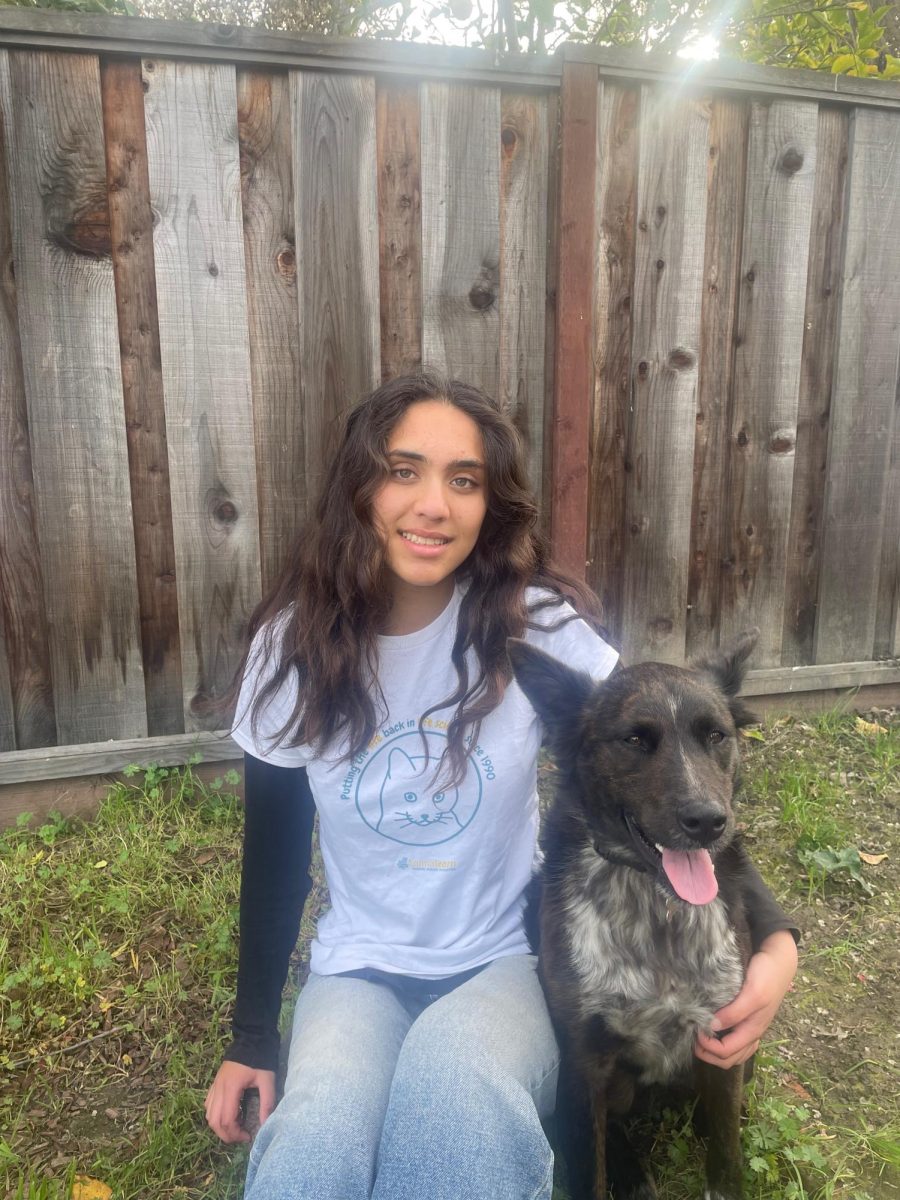
Jasmine Wang-Jethi (‘28), a student at Amador Valley High School, is changing how students experience dissection labs. Through her work with AnimalLearn, she introduced alternative synthetic animal models into classrooms, earning her the Humane Student of the Year Award.
Inspiration
Growing up, Wang-Jethi lived in an environmentally conscious household, which she believes sparked her passion for caring about animals and led her to become an advocate for animal welfare.
“When I was growing up, I’d say my family was very environmentally conscious. For example, we didn’t own a car for the first 10 years of my life, meaning I would bike everywhere, and my mom would collect water from the sink to water her garden with. I think when you’re more conscious of how your decisions are affecting animals and the environment, it really leads to you being able to make a bigger impact, in a way. So that background is kind of what inspired me to advocate for animals,” said Wang-Jethi said.
Her interest grew after a summer program on factory farming, an industrial system that raises large numbers of animals in confined conditions. She also worked with AnimalLearn, a nonprofit promoting humane science education, and New Roots, which empowers students to advocate against factory farming.
“For animal welfare in general, I did New Roots Summer Leadership Academy, and that program focused on factory farming. And that was what inspired me to start advocating for animals in general. And I chose models specifically in science because a lot of the science classes I attended didn’t offer models to students who objected to dissection. Usually, they only offer packets, or gizmos. I believe these alternatives aren’t the best way for students to have a hands-on learning experience,” Wang-Jethi said.
Guiding Education
Wang-Jethi began working with Amador Valley and Harvest Park Middle School to encourage the use of synthetic models instead of traditional dissections, offering a more animal-friendly alternative to specimens sourced from slaughterhouses, animal shelters, and wild harvesting.
“First, I began with finding all the science teachers that dissected. I mostly contacted biology teachers, AP bio teachers, and anatomy. And, from there, I asked them to fill out a form, explaining what animals that I sected, whether they would be open to implementing alternatives, things like that. And then I asked to have a meeting with them. I had more success at the middle school where I met with Mr. O’Dea,” Wang-Jethi said.
Kevin O’Dea, a middle school science department head Harvest Park, was one of the first to use the new models after Wang-Jethi introduced them. He joined a pilot program through AnimalLearn and now tests how they perform in the classroom.
“When I met with Mr. O’Dea I demonstrated the kind frog model, as well as a rat model, in person, and showed him how it worked. He kept the models and said he would consider them. Later on, he met with Nicole, who’s my campaign advisor, and she explained it to him in more detail, and then he agreed to implement the rat models for students who objected to the rat dissection this spring. He also talked about possibly completely replacing frog dissections next year with the kind frog models,” Wang-Jethi said.
Lasting Impacts
Many students often find animal dissection disgusting, and synthetic models allow educators to give students an alternative hands-on experience.
“I’ve been leading in-class dissections in my classes for a long time and believe they should be part of every biology curriculum. However, after learning about how some of these animals are collected and prepared, I was shocked by how inhumane many of the practices were, especially for frogs. I will still do one traditional dissection lab with rats, but thought that using the “fake” frogs as an introduction to dissection would be a good primer for students,” O’Dea said.
Although these synthetic models are a great alternative they don’t compare to the traditional specimens which do not always have the same learning outcomes.
“The models are anatomically correct so I think that this will still allow my students to learn the basic anatomical parts and functions. However, since the models are all the same, students will miss learning about the countless variations that may exist in similar species. Students also won’t learn as much about proper clean-up techniques since these models are obviously less messy,” O’Dea said.
Recognition
For Wang-Jethi, the award served as a reminder of the impact her efforts have made in her local community and reflects her passion and care for animal welfare.
“Winning the Humane Student of the Year Award, really validated a lot of the work that I’ve done. A lot of the times when students do campaigns like these, they don’t often see results very quickly. And it does take a lot of persistence in the campaign before you start seeing success. And I think this award really motivated me to continue working towards this, because it showed that what I’m doing is actually impacting students within our school district,” Wang-Jethi said.
Her efforts are not only recognized, but also reached teachers directly, influencing how they approach dissections.
“I applaud Jasmine for reaching out to me out of the blue. There have always been students who have moral and ethical objections to dissections, but Jasmine is actually doing something about it. Despite my love of dissection labs, she helped convince me that there are other good options out there,” said O’Dea said.