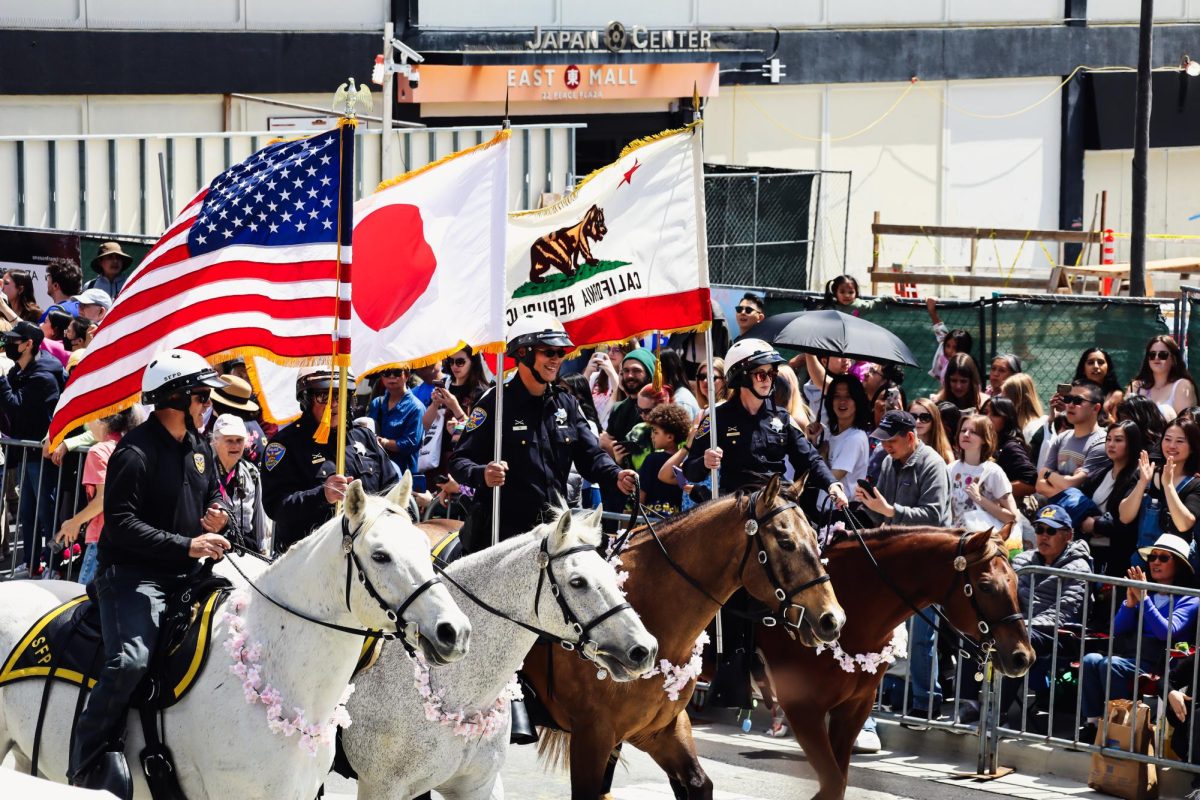
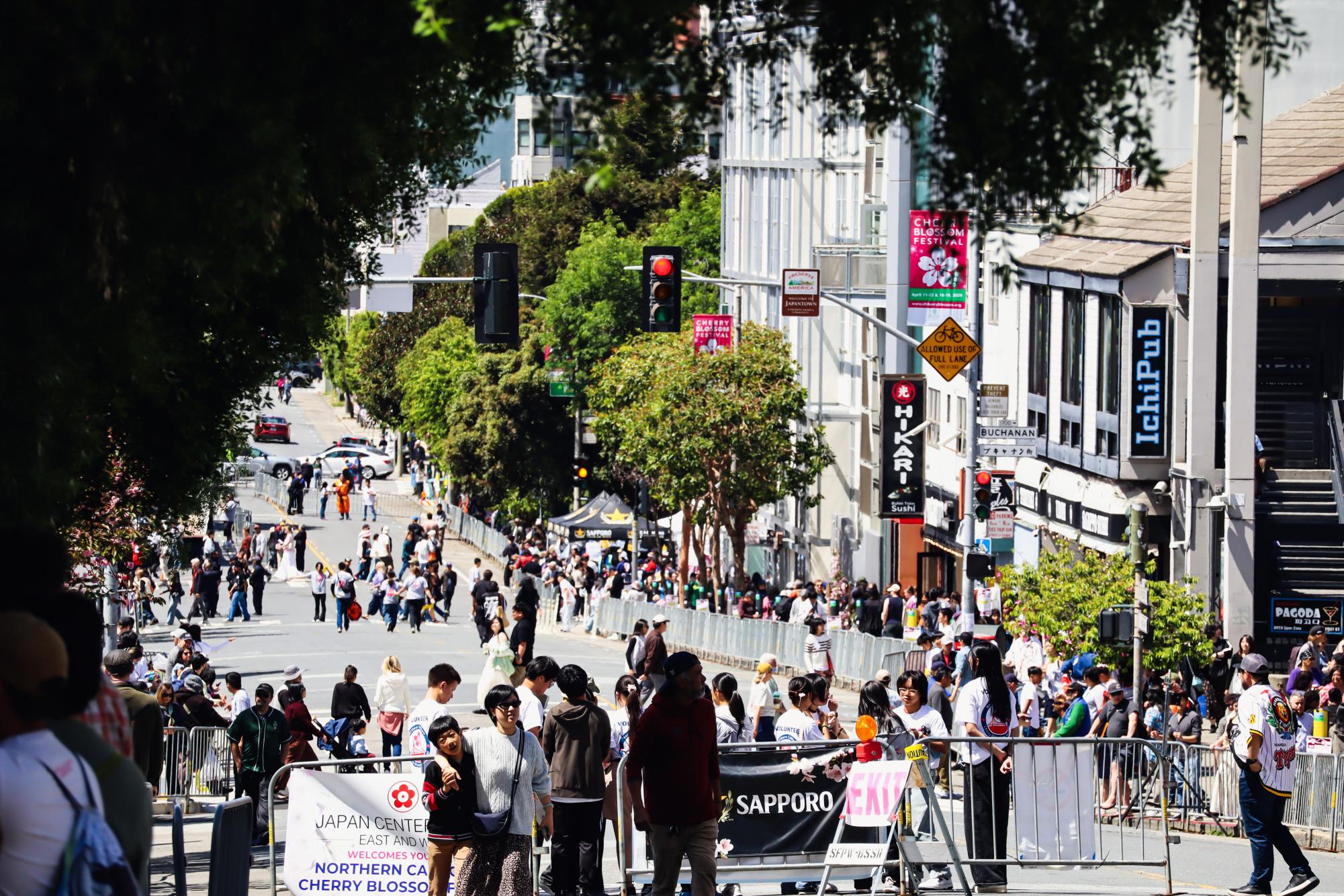
Every year, hundreds of thousands flood to San Francisco’s Japantown for the annual Northern California Cherry Blossom Festival (NCCBF). The neighborhood’s streets bustle with performances, food stalls, and swaths of people stretching down Post Street. But behind the crowds and cultural displays is a year-round, volunteer-run operation that brings the festival to life.
Coordination For A Cause
The volunteers’ collective effort supports a festival with deep cultural roots. It takes place across two weekends in mid-April annually. As the one of the largest celebrations of its kind outside of Japan, the NCCBF has long served as a bridge between communities.
“I think one of the biggest goals and missions for the Cherry Blossom Festival is to celebrate Japanese and Japanese-American culture. It’s all about bringing the ties together and friendship of Japan and America,” says Leah Roberts, a tri-chair on the festival’s public relations and marketing team.
While attendees experience the festival over just a few weekends, planning begins months in advance and rarely stops. Roberts explains that even during the current festival, organizers are already preparing for the next.
“Right now we’re in full swing of the 59th festival, but we’re already thinking about the 60th,” she says. “It is a year-round process of working with sponsors and vendors and local businesses and working even with Japan itself.”
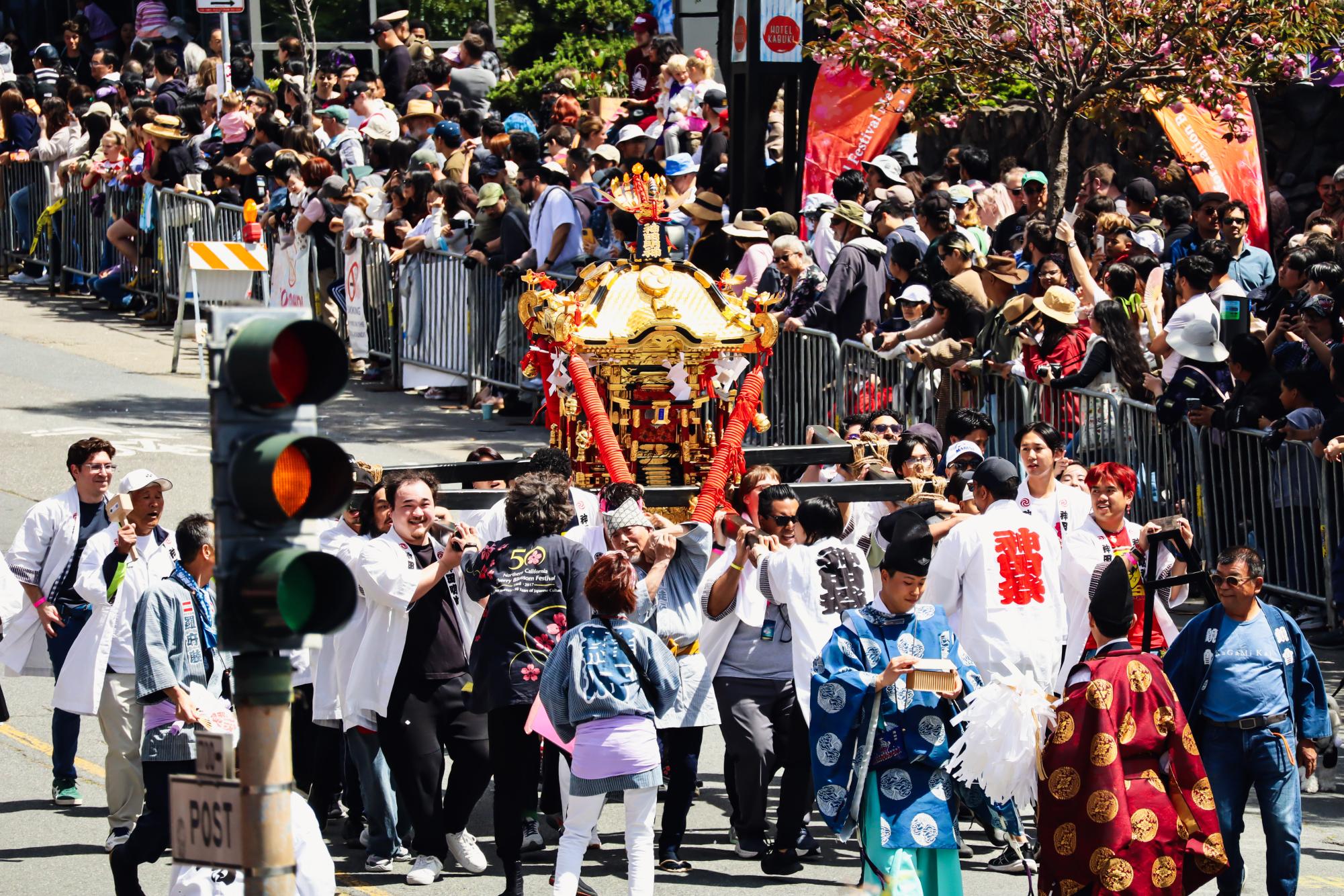
That coordination plays a key role in preserving the festival’s cultural authenticity. One of this year’s highlights was the return of a mikoshi, a portable shrine traditionally believed to carry a deity and bring blessings. A priest from Japan’s Kanda region traveled to San Francisco to perform a blessing ceremony, reinforcing the event’s ties to its origins.
“We always want to keep ties with Japan as best as we can,” Roberts says. “That could be through friendships like this where we have important priests coming over, or we’ll have singers from Japan perform in our festival as well.”
A Team Effort
Despite its scale, the festival is entirely run by volunteers, making community involvement essential. From executive members to those setting up booths early in the morning, each role helps keep the event running.
Volunteer turnout continues to be a major hurdle for the festival.
“We have a lot of passionate volunteers,” Roberts says, “but as you can see it is also really hard to get them to come out each day…but we are so thankful for the volunteers because we really can’t do it without them.”
Unpredictable weather adds another challenge, often affecting local businesses and nonprofit organizations that rely on the festival for income and fundraising. On the ground, volunteers take on a wide range of responsibilities. Kellen Reeves, a returning volunteer, describes starting early with setup before rotating through tasks like organizing booths and sorting waste.
“Originally, I needed community service hours for school, so my friend and I did it together and it was pretty fun. You get to help your community, meet new people, and see what happens behind the scenes,” said Reeves.
Cultural Connection
For Reeves, the experience is also personally meaningful. As someone with Korean heritage, he says elements of the festival remind him of his own background, showing how the event resonates beyond a single culture. For attendees, that sense of connection is part of the appeal. Many come simply for the overall atmosphere. Local businesses put their work on display, the stage is filled with performances, and the star of the show — the Grand Parade — stretches over a mile from Civic Center to Japantown.
“I think for most people, they’d say the artist alley is great because you get to see local artists up close,” said attendee Patrick Sanchez. “But I also like just walking around and experiencing everything.”
Sanchez notes that while the festival can be crowded and expensive, it still offers something unique.
“I think it’s a great time to come because you can meet people with similar interests and experience the culture in person. It’s busy, but it’s definitely worth it,” said Sanchez.
Through careful planning, volunteer effort, and cultural tradition, the festival continues to bring people together — both behind the scenes or in the crowd.