
Superintendent Maurice Ghysels, PUSD Board President Kelly Mokashi, and Vice President Laurie Walker sat down for a Q&A on March 18. They responded to community concerns over the district’s passed budget cuts.
The PUSD Board of Trustees met in mid-December 2025 to approve the first interim budget report for the 2025-26 fiscal year. Although there were slight improvements, the district still forecasted an ending fund balance of negative $2.5 million, resulting in the approved budget cuts.
“One [factor of this deficit] would be the local community control formula, which dictates the funding for our district. Due to our demographics and unduplicated accounts, our funding support from the state is less compared to other high-need communities. In addition, many other school districts get additional funding support, such as parcel taxes, which our community lacks,” said PUSD Board President Kelly Mokashi.
The PUSD board has been pushing for parcel taxes, or local property taxes specific to California, for over 15 years. 70 out of roughly 110 school districts around the Bay Area utilize parcel taxes. However, implementation of these taxes requires a two-thirds majority of voter approval, a number that the district has repeatedly fallen short of.
Upcoming Cuts
In November, the Pleasanton Unified School District Board of Trustees approved $11.2 million in budget cuts for the 2026-2027 school year, including reductions in support staff, district services, and administrative responsibilities.
The reductions were passed as a response to PUSD’s declining enrollment numbers, discontinuation of COVID funds, and relative underfunding compared to other school districts.
“In the past few years, our district’s funds have gone down by more than $27 million. That’s a lot of money. That’s a lot of pain… and this is a statewide thing, particularly in the urban areas,” said Superintendent Maurice Ghysels.
Compared with nearby districts with similar demographics, PUSD receives a much lower percentage of state funding, considering the number of underprivileged children attending.
“ Students from households of poverty, on how students, English language learners, foster youth, right? We have 16% of the students in that category…That 16 percent only equates to $5 million of actual money, which is only 2% of our budget, which puts us in the lowest decile of all funded schools in the state,” said Ghysels.
According to a PUSD “at a glance” outline of the district’s fiscal challenges, lower birth rates since the pandemic and higher living costs of the area contributed significantly to recent enrollment declines.
Changes Moving Forward
In his address, Ghysels also elaborated on plans to stabilize district funds. Ghysels said the district had relied too heavily on COVID funds and budgets needed to optimize for long-term over short-term benefits moving forward.
“We’re gonna be compassionate. We’re gonna connect, and we’re gonna keep going. Looking ahead, we’re gonna do some big strategic planning starting in April, [continuing] to focus on our students, strengthening our culture, and–first and foremost– we’ve got to prioritize long-term stability,” said Ghysels.
Bond-Funded Facility Projects Continue
The panel also addressed the progress of bond-funded projects across all Pleasanton schools. Measure I has allowed the district to fund renovations at several elementary, middle, and high schools– including renovations for the Amador and Foothill gyms and theaters.
“All our [currently undertaken] school projects are set to be done by 2030,” said Mokashi.
Some community members, however, are concerned that the district is spending money on facility upgrades while simultaneously cutting staffing and programs. However, these upgrades are funded by the $395 million in renovations that voters approved as part of Measure I.
“It does seem a little lopsided, because right now, there is…a lot of information being shared of current facility projects…any type of facility repair associated with the bond has been voter-approved by you. And there’s very specific ballot language that has to be followed…when we take a look at the challenges of the reductions in force, staffing, that all comes through the general fund,” said Mokashi.
Strategic Fund Allocation
Last November, the PUSD board expressed interest in minimizing direct student impact from these budget cuts. Mokashi reiterated the commitment to that goal when asked about decreasing specials such as art and PE for elementary schools.
“No official schedule changes have been identified as of right now… some layoff notices may even be rescinded, which will also support the collaborative effort to maintain our bell schedules,” said Mokashi.
Negotiations With Labor Unions
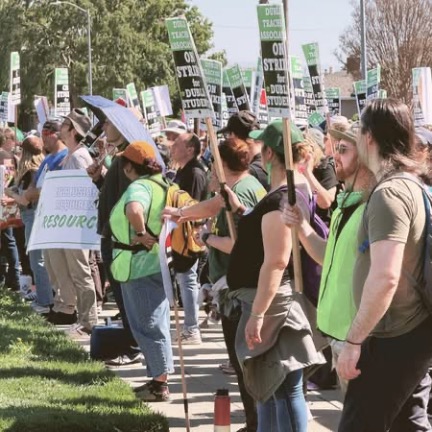
During the Nov. 20 special meeting, the board decided to reduce substitute pay rates by $25, contributing to the staff’s frustration. Even so, most of the discussed budget cuts are reliant on the agreement from both teacher and student unions.
“Partnering with labor unions, for example, CMCA and APT, the teachers’ union is really important to have common goals in supporting our students. I hope that as we continue with negotiations, we can identify areas where we can really tailor or tweak the programs, but not necessarily [require] complete elimination,” said Mokashi.