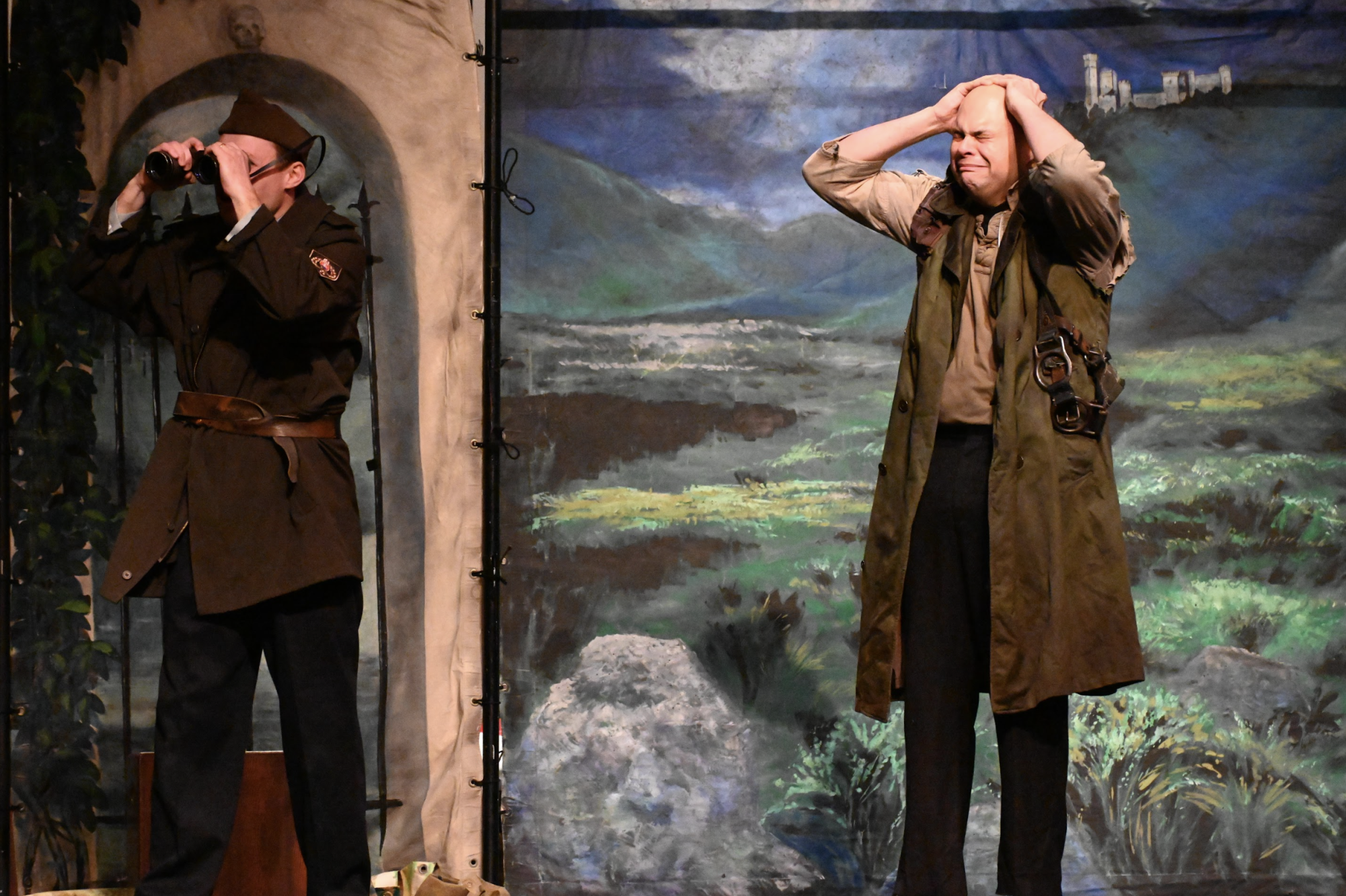
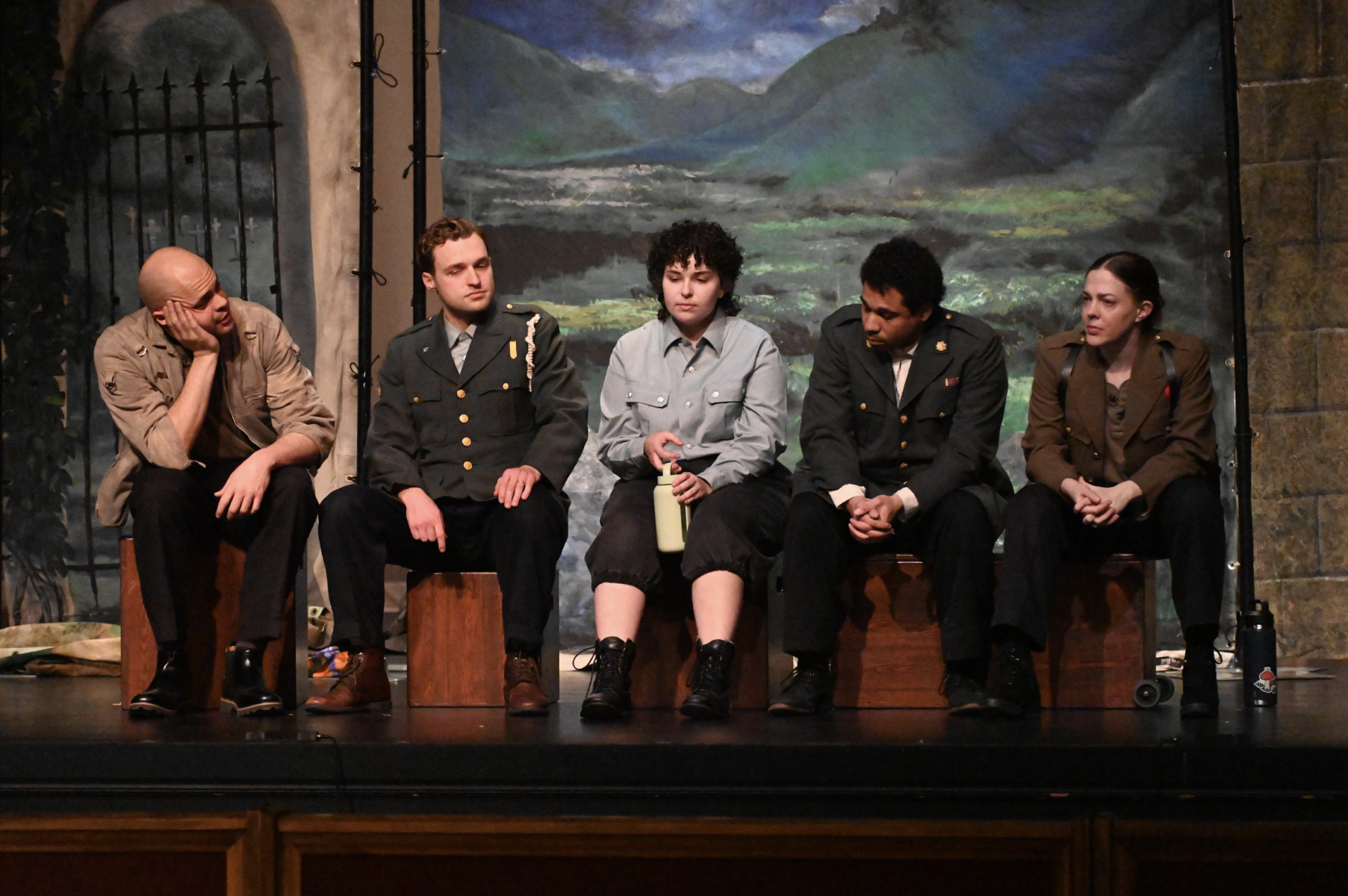
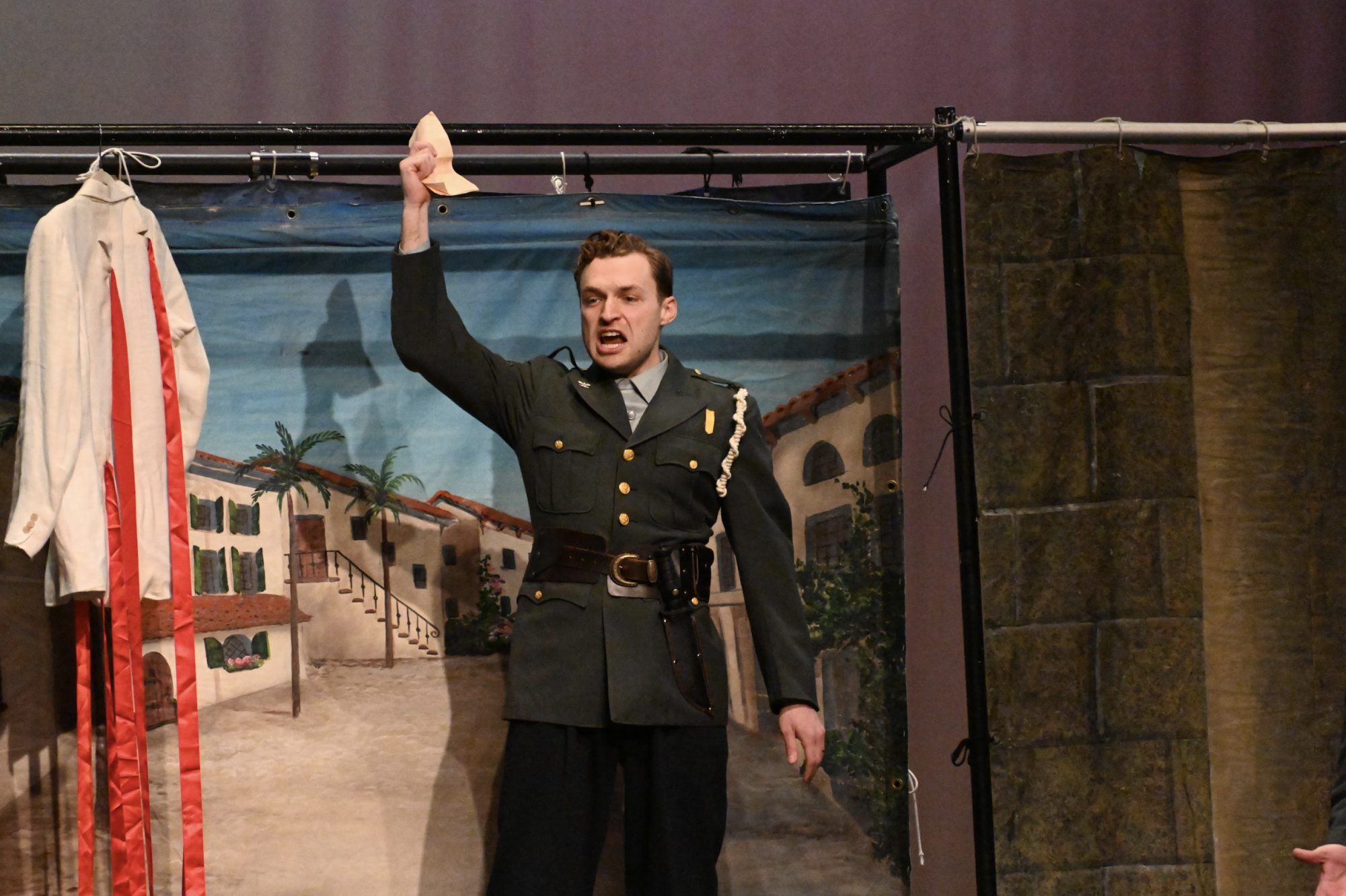
On Feb. 10, Amador sophomores watched a live performance of Julius Caesar, Act III in the Amador Theater. After analyzing the Shakespeare classic throughout Honors Sophomore English, students were able to experience the drama beyond the classroom.
“It honestly felt kind of nostalgic, bringing me back to the last semester. But also I was kind of thinking how it was missing a lot of parts. So kind of, you know, the nerdy part of me wants to kind of like throw that out,” said Hilel Avigad (‘28).
Bringing Shakespeare to Amador
The act was performed by members of the San Francisco Shakespeare Festival, known for performing many of Shakespeare’s famous plays for free. Stacey Sklar, AP Literature, Comp Civis, and Honors Sophomore English teacher coordinated this performance for the sophomores.
“I have brought them to school maybe two other times before, and we know that they always do a really good job, it’s really nice for students to see what we read come to life,” said Sklar.
The performance at the Amador theater was part of more than 50 touring performances of Shakespeare on Tour’s “Julius Caesar.” The cast consists of five actors that perform at schools, libraries, and community centers. They arrive at each location with the set, costumes, and props to perform a professionally-directed production. They are able to convey the full story in under 60 minutes.
“Julius Caesar was the first Shakespeare play I ever read in high school. I liked acting all my life, but that was really when Shakespeare started appealing to me. So to be able to go back to schools and hopefully provide some sort of inspiration or provide that same sort of spark for students is a really great opportunity,” said Sarah Dunnavant (actor of Portia, Calpurnia, Casca, and a citizen).
Relevance of Julius Caesar
The play features famous speeches by characters Mark Antony and Brutus. In this way, Julius Caesar offers an excellent way to study persuasive language and rhetoric. It allows students to enhance their reading comprehension by exploring a complex plot with multiple possible heroes and villains.
“The reason why we’ve been doing this for the past 400 years is that his stories will stand the test of time. The company chose to do Julius Caesar as an allegory of the events that are kind of happening today. The consolidation of power and what is to be done with that power. There’s always going to be a story that you can relate to our current day through Shakespeare,” said Brandon Dipaola (actor of Julius Caesar, Cinna The Poet, a citizen, and Octavius).
Struggle and Joy of Performing Shakespeare
Performing a Shakespearean production can be both rewarding and challenging. It allows actors to make bold artistic choices that are often not feasible in contemporary theater. However, mastering Shakespearean language and conveying its true meaning to an audience can be difficult.
“When you learn how to act Shakespeare, part of what you’re doing is learning how to make the language accessible through your entire performance in your body. This is so that even if the audience doesn’t understand every single word, they’ll get the gist of what you’re saying because your emotions and your specificity of your language is, and your relationships are showing you what the language is saying, even if it’s not perfectly understandable 100% of the time,” said Dunnavant.
The Julius Caesar performance by the San Francisco Shakespeare Festival was an intellectually engaging experience for students. During the production, cast members invited two student volunteers to participate as citizens in one scene. At the conclusion of the performance, the cast held a brief discussion and answered questions from the audience.
“They said to raise your hand if you want to go on the stage and I did. I like acting so I will take any excuse I get to do theater. It was very interesting because I’m used to acting where you know beforehand what you’re gonna do and what you’re gonna say. It’s so interesting being told in the moment all the lines and actions,” said Allie Schumacher (‘28).