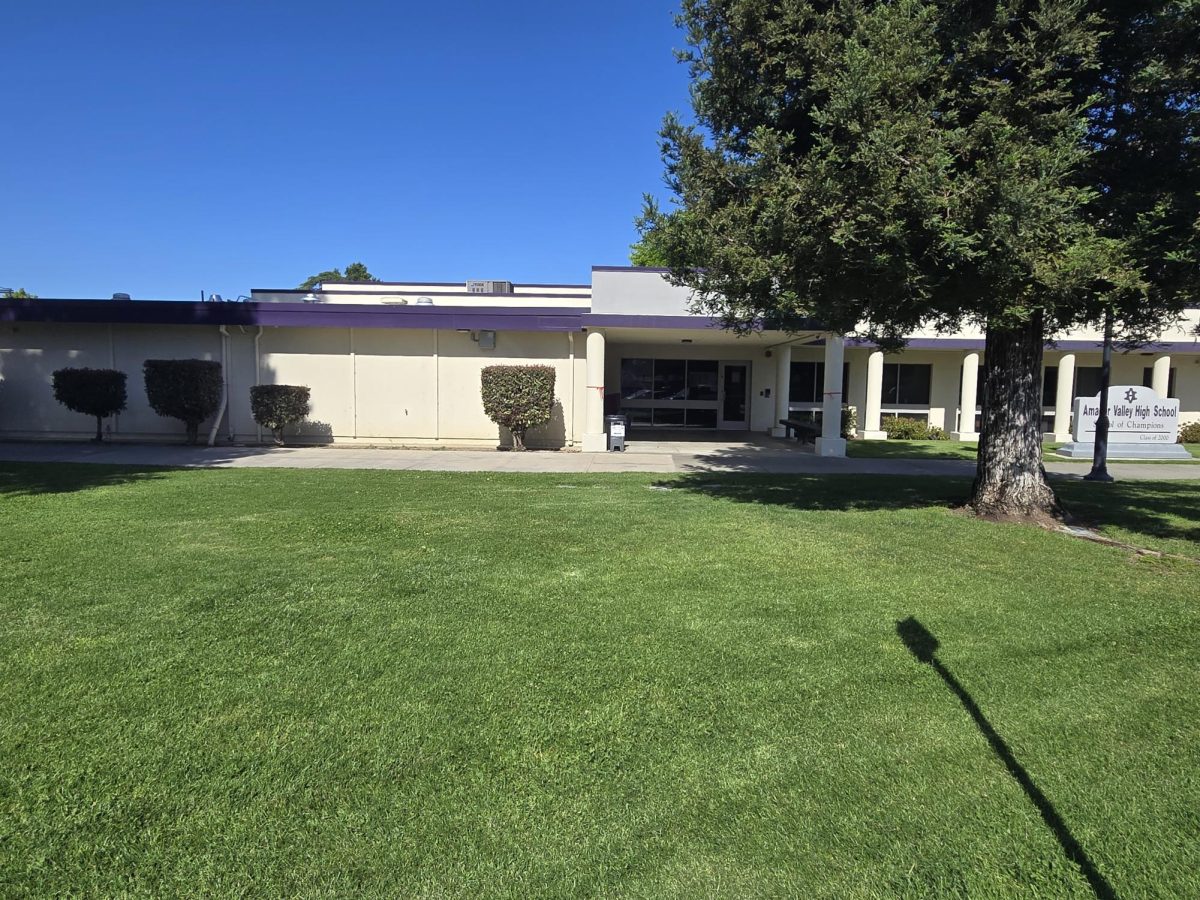
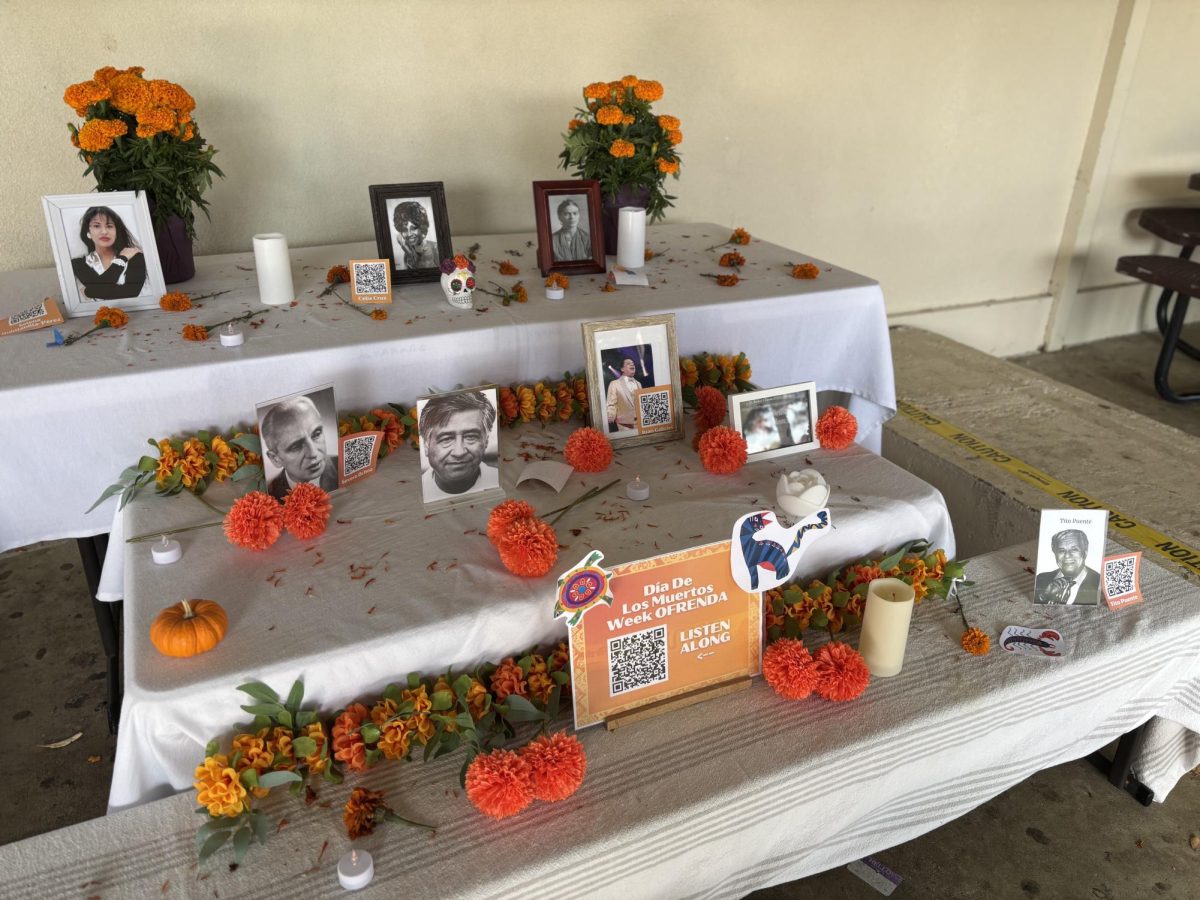
As November kicked off with Day of the Dead festivities, Amador’s very own Latino Club created an altar to celebrate. By scanning codes placed at the altar, students got the opportunity to explore the lives of Latin America’s most honored heroes.
“Day of the Dead… [is] about honoring people who have passed away. And I love the idea of keeping the memories alive of those who have passed,” said Julie Boe, Latino Club advisor.
Honoring Hispanic Heroes
The altar, near the H-building, features photos and information about many heroic Hispanic or Latino figures who gained the attention of the club. For the club members, these people who have passed are more than just celebrities; they’re heroes.
“I really like Cesar Chavez’s work. He did a lot for [the] community in terms of equal rights and opportunities. As part of Latinos in STEM, we go every year to the Cesar Chavez Youth Leadership Conference up in UC Davis. So it’s really nice to actually be able to put up his frame and honor him in a way, a little personal way,” said Latinos in STEM and Spanish Honors Society Club president Diego Laredo.
Along with Chavez, the altar features other activists, musicians, and artists. Grammy-winner Tito Puente, singer-songwriter Juan Gabriel, professor Severo Ochoa, and passionate artist Frida Kahlo are just some of the heroes displayed. The “Queen of Tejano Music,” Selena Quintanilla, particularly caught the eye of many club members.
“She [Selena Quintanilla] showed a side of the culture that most people don’t experience, and she showed a part of the Hispanic world and that even… if you didn’t grow up… speaking Spanish, you could still experience it…. [even if] you didn’t grow up speaking Spanish, you shouldn’t be ashamed of it and you should be embracing your culture,” said Latino Club President Maya Martinez.
Celebrating the Dead
One of the ways the Latino Club celebrated Dia De Los Muertos was by spreading small animal cutouts around campus. If students found and collected three of these animals, they received a delicious pastry as a reward.
“I think when someone passes away, death [seems] so permanent. But really, when you think about it, those people are always with us. And Day of the Dead is a way of sort of commemorating that belief system that when people are gone, they really aren’t gone. Their spirit still exists. And when you look at the altar outside, you can see the memories and the faces of all of these amazing people who have contributed greatly to the world,” said Boe.