
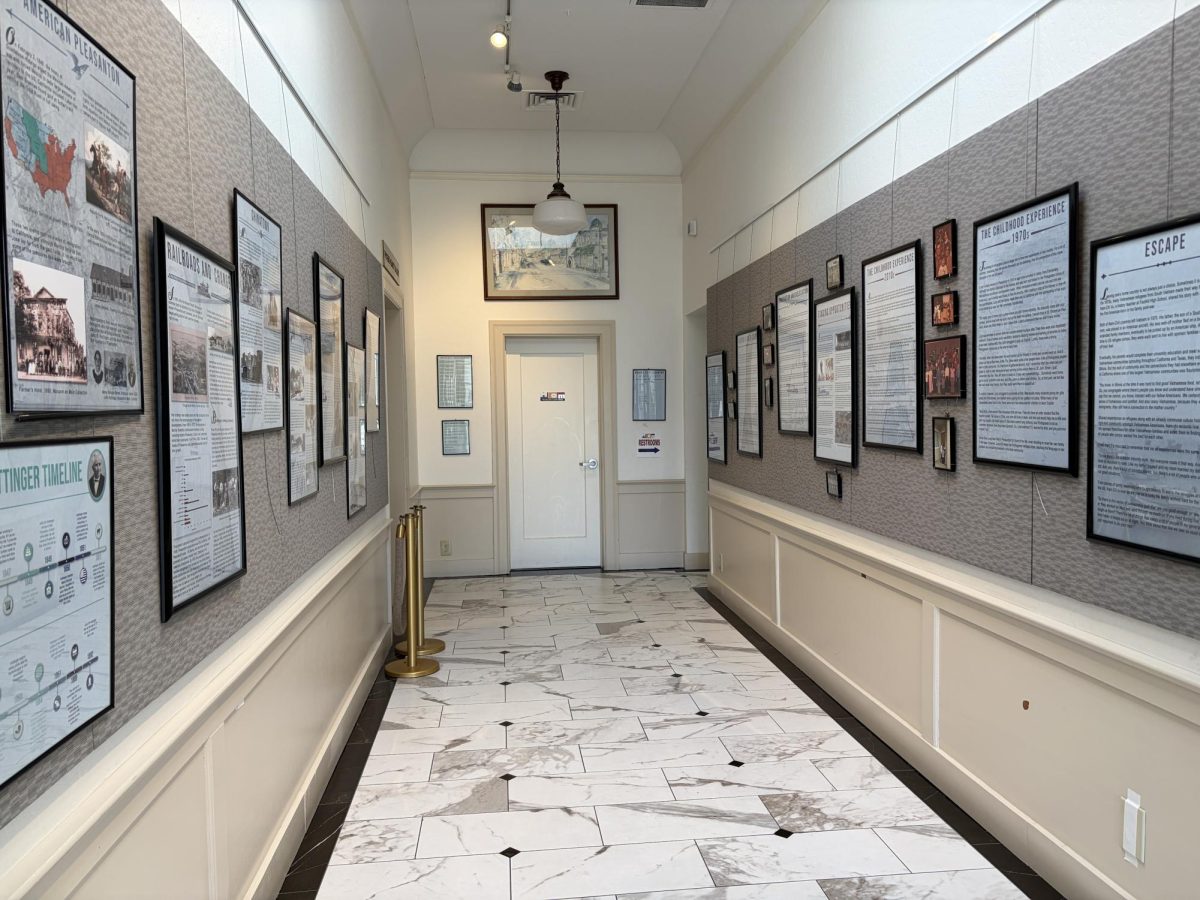
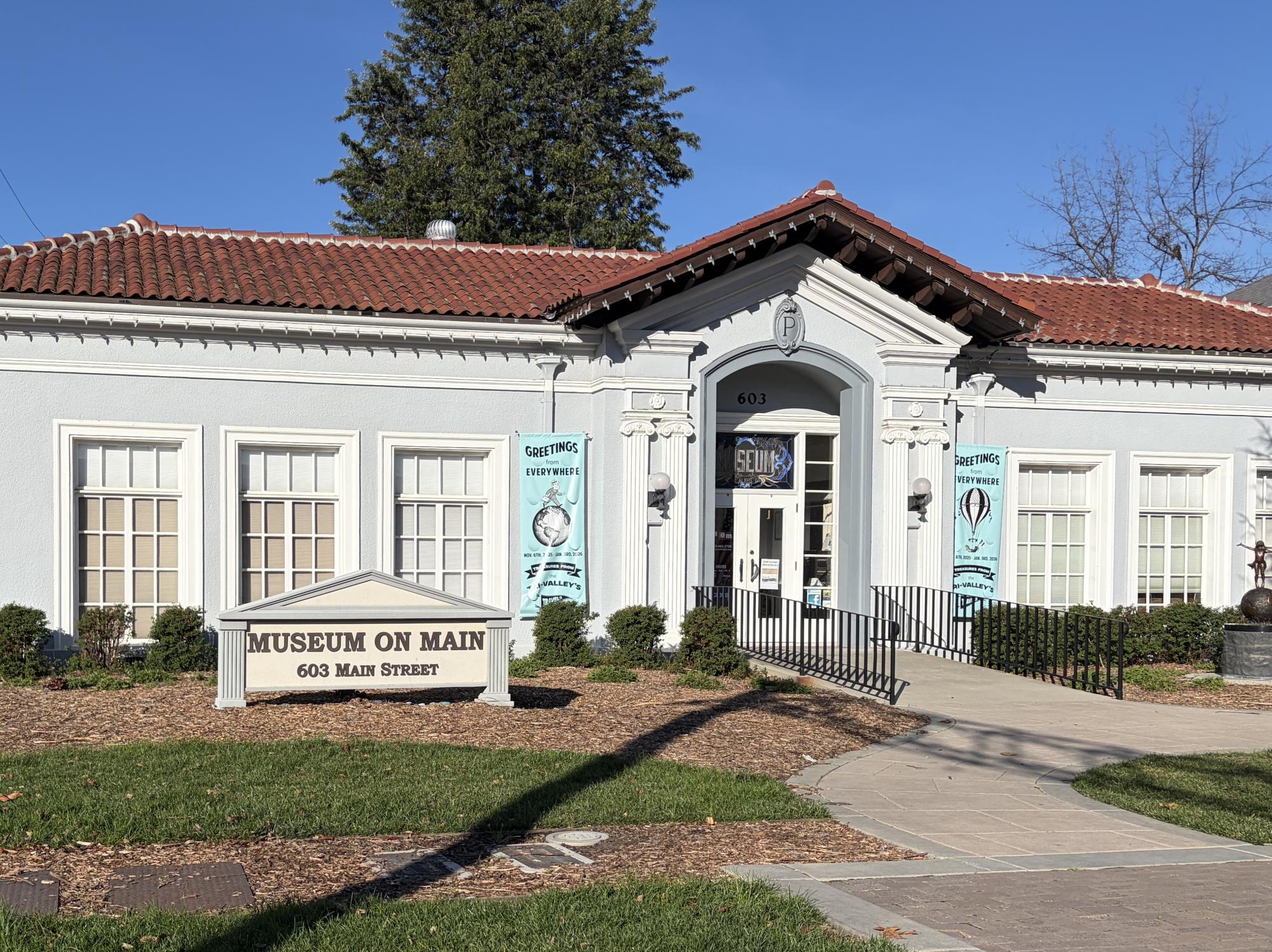
Amidst national controversy and anti-immigration sentiment, Museum on Main’s exhibit, Coming to Pleasanton, highlights the struggles and contributions of Tri-Valley immigrants. Located in the museum’s main hallway, it features over twenty frames of photographs and stories of early and contemporary immigrants.
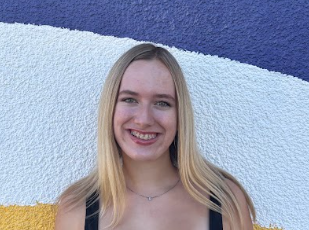
“I think connecting the people who shaped Pleasanton today with the people who shaped Pleasanton 200 years ago is really important,” said lead curator Tanvi Gupta (‘25).
The idea for the exhibit was proposed by Gupta during a standard museum volunteer meeting. She was inspired by President Donald Trump’s statements about immigration to create an exhibit humanizing immigrants.
“I don’t think I’ve really seen it in a lot of other museums… I think this one is just… a great means of getting to know others, getting to know about history, and avoiding stereotypes and that sort of stuff when seeing other people that aren’t typically seen,” said student volunteer Shiben Bhogisetty (‘27).
As the project advanced, volunteers took on different roles and learned to work as a team. Gupta, the head curator, led the team of about five student volunteers.
“As a curator and as one of the older people in the group, a lot of it was managing some of the other members of the group, trying to keep them on top of tasks. We had a Slack, and we’d just have to keep weekly reminders, help people navigate some of the research tools at the museum,” said Gupta.
Once plans were made and roles were assigned, volunteers began interviews and deeper research. Students reached out to immigrant family members and local businesses to gain a more personal perspective on the migration process.
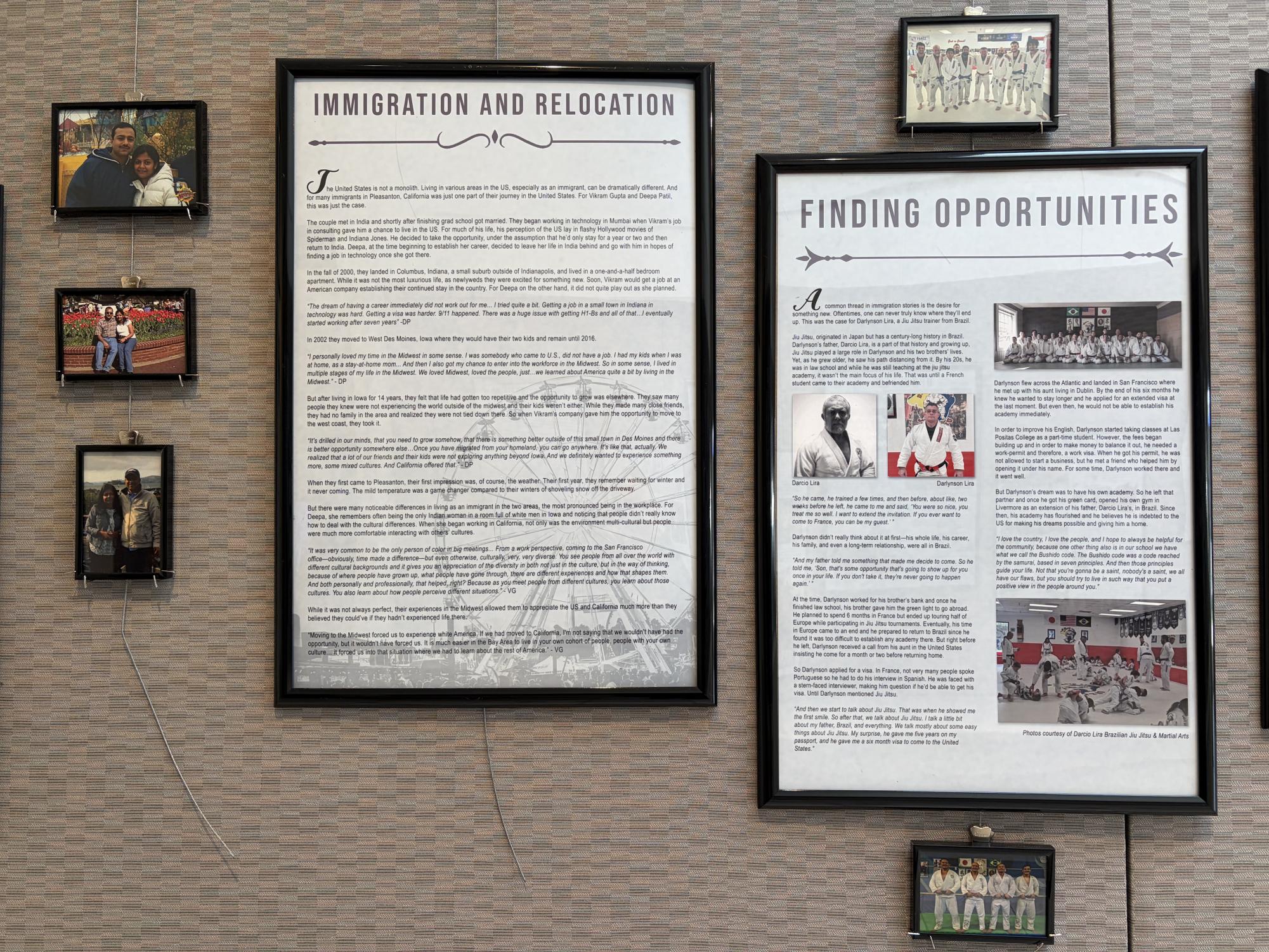
“[I enjoyed] my interview with Darlynson Lira, and it was the first time we went to his dojo. I didn’t expect to interview him in a dojo, so it was kind of a weird scene. But at the same time, I was like, ‘wow, this man is really cool,’” said Bhogisetty (‘27).
Darlynson Lira is an immigrant from Brazil. He owns an extension of his father’s dojo in Livermore. At the dojo, he teaches the Bushido code—the idea that nobody is perfect, but that you should try to make a positive influence on the people around you.
“And my father told me something that made me decide to come. So he told me, ‘Son, that’s some opportunity that’s going to show up for you once in your life. If you don’t take it, they’re never going to happen again,’” said Lira.
-
The exhibit features over ten frames of information and photos about local immigrants and immigration trends.
-
Museum on Main’s most recent community gallery turns its main hallway into a timeline of global immigration in Pleasanton and the greater Bay Area.
-
The museum tells the story of Chinese, Portuguese, Spanish, Chinese, Japanese, and other global immigrants. Frames display each’s distinct contribution to local traditions and culture.
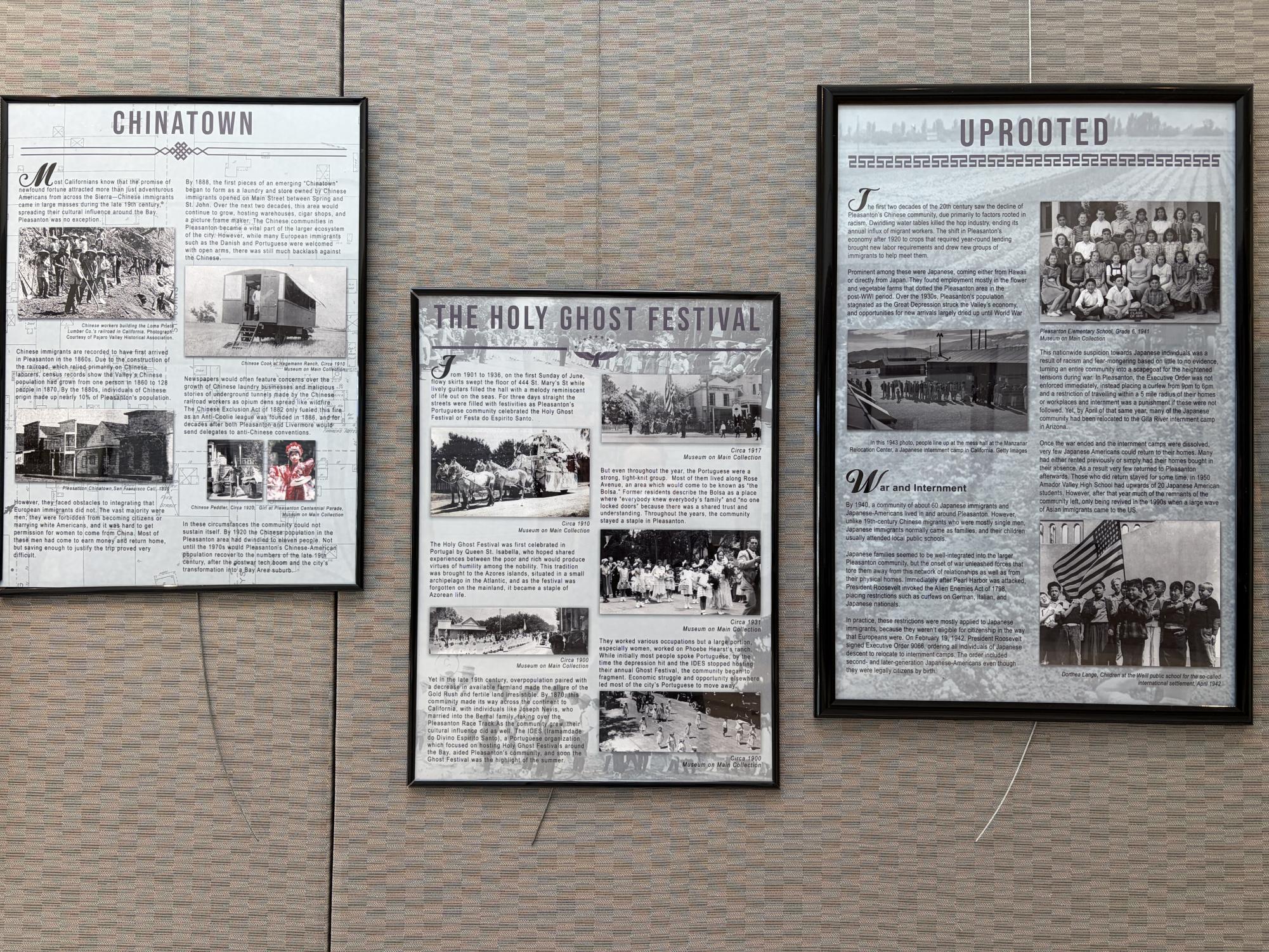
Alongside interviewing local immigrants, students also looked back in history to examine how Pleasanton has historically been shaped by immigration. Moving chronologically, the first frame in the exhibit discusses early Spanish settlements.
“We start with a more historic section, going through the Spanish arrival and into the early 20th century. And then there’s a second half that has interviews with people who live in Pleasanton today, sharing their stories about immigrating and discussing their different struggles,” said Gupta.
The exhibit also features stories of families affected by Japanese internment camps and other families’ struggles with assimilation.
“People had to go through to be successful here. But even then, they still found their way through those adversities, and they’re still able to be successful and thrive even under a small community,” said Bhogisetty.
Despite their struggles, “Coming to Pleasanton” showcases how immigrants have made their mark on the Tri-Valley. In addition to opening local businesses, immigrants have brought festivals, foods, and community to Pleasanton.
“As an immigrant myself, it really does show… why it’s so important that you should be more understanding. If there’re people who are like, ‘the immigration is bad,’ maybe if they hear the story they’d do better,” said Leanne Jabie (‘26).
The exhibit provides a more in-depth look at the various historical and contemporary immigrants who have left their mark on Pleasanton. In a time of negative press and sentiment surrounding immigration, Coming to Pleasanton brings light to the immigrants that have helped shape the Tri-Valley.
“I think that also relates to what’s happening today with the Trump administration and how immigrants are being treated, in a political sense. So I think that finding that connection and understanding that immigrants have always been part of this country and always been part of Pleasanton was really important to me,” said Gupta.